
Ice dams are ridges of ice that form along the lower edge of a roof, near the gutters. They can cause significant damage to your roof, lead to leaks and increase your heating bill. Here's how they form and what you can do.
How an ice dam forms
- Snow builds up on the roof.
- Heat escaping from the house warms the upper part of the roof, and the snow on it melts.
- The meltwater runs down to the edge of the roof, which is colder, and freezes again.
- Over time, this ice forms a ridge that holds back the water still running down. That water can then seep under the shingles.
Signs to watch for
- A ridge of ice along the gutters or the edge of the roof
- Long icicles hanging from the gutters
- Water stains or moisture on ceilings or walls near exterior walls
If you see signs of a leak, contact a roofing professional.
Prevention: remove the snow before it melts
An ice dam needs snow on the roof to form. Clearing the lower part of the roof after each significant snowfall limits the amount of snow that can melt and refreeze at the edge.
- Start with the first 2 ft (60 cm) of snow closest to the gutters. It's also the area that gives you room to work.
- Then clear 5 ft at a time with upward strokes, moving sideways along the roof.
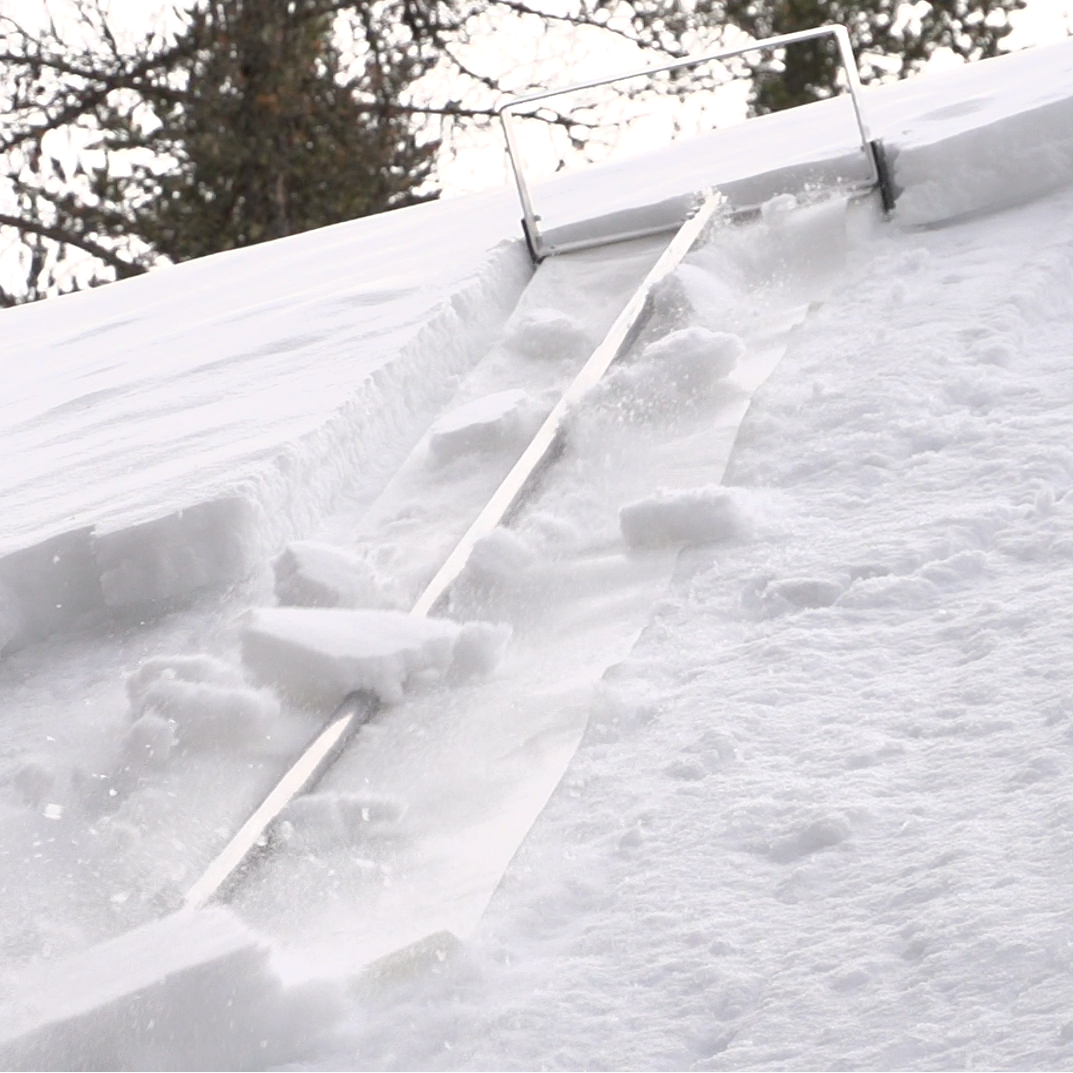
- Work from the ground with a roof rake like the SnowPeeler Classic or the SnowPeeler Premium, so you don't need a ladder.
Insulation and attic ventilation also play a role in limiting the heat that reaches the roof. A professional can assess your attic.
Don't break the ice with a roof rake
A roof rake is designed to remove snow, not to chop or break ice. Trying to break an ice dam can damage the roof. Remove the snow regularly instead, and call a professional if an ice dam is already causing a leak.
Want to estimate how much snow is on your roof? Try our snow load calculator. To clear your roof safely, read how to use a roof rake without damaging your roof.
Share:
SnowPeeler Care, Storage and Replacement Parts
Clearing Snow From Low-Slope Roofs and Roof Valleys